
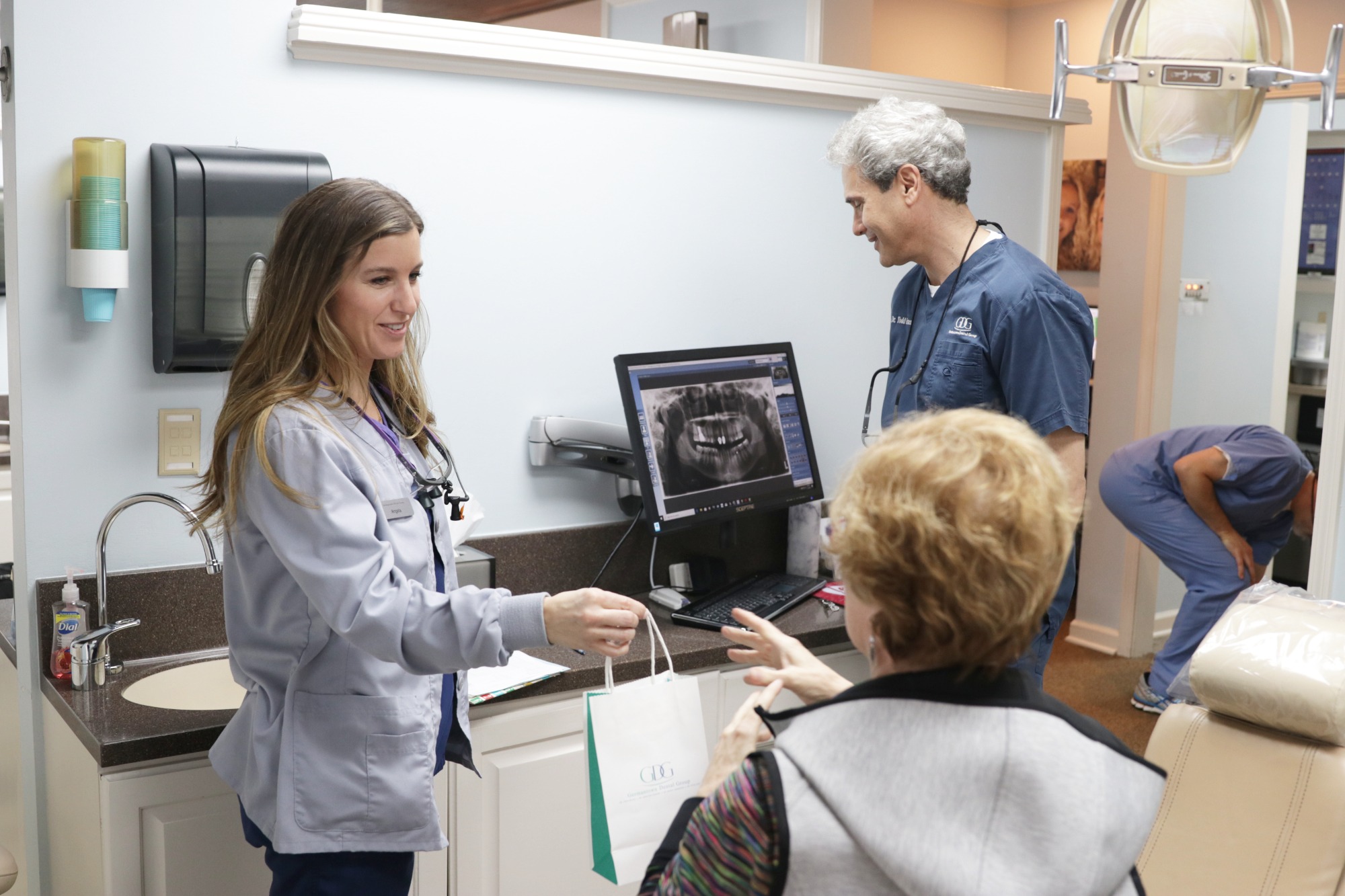
Replacing a missing or failing tooth with a permanent restoration involves two components working as one: the implant and the crown. Getting implants and crowns done together as a single, coordinated treatment plan is the most predictable way to restore both function and appearance. At Germantown Dental Group, our cosmetic dentists guide you through every stage, with sedation dentistry available to keep each visit calm and comfortable.
The sections ahead walk through the full treatment plan, the role sedation plays during treatment, how the process compares to alternatives, and what shapes your plan. By the end, you’ll have a clear picture of what to expect and how to decide if this path fits your situation.

What Does a Combined Implant and Crown Treatment Plan Involve?
A combined implant and crown treatment plan is a staged restoration where a titanium implant post, a connecting abutment, and a custom porcelain crown are planned, placed, and finished as one coordinated case under a single provider. The plan typically spans three to six months and includes imaging, placement, healing, and final crown seating.
Planning both pieces together matters for a few reasons:
- Predictable results. The crown is designed with the final implant position in mind.
- Matched aesthetics. Shade, shape, and bite are coordinated from the start.
- One provider timeline. You stay with the same team from consult to final seating.
This approach is a good fit for patients with a missing tooth, a tooth that’s failing and needs removal, or several sites that need restoration. Because the full plan can involve implant placement, healing checkpoints, and final restorative visits, sedation dentistry at Germantown Dental Group plays a central role in keeping you comfortable from the first appointment to the day your new tooth is seated.
The Step-by-Step Treatment Plan: Consultation to Final Crown
Here’s how the dental implant and crown procedure typically unfolds at Germantown Dental Group, from your first visit through final seating:
- Consultation, 3D imaging, and digital smile planning. Your initial consultation includes a full oral exam, 3D CBCT imaging to map bone volume and nerve position, and digital smile planning so you can preview the result before treatment begins.
- Extractions and bone grafting (if needed). If a failing tooth needs removal or the site lacks enough bone to support an implant, extraction and grafting are completed first. Grafting adds a healing window, usually a few months, before the implant can be placed.
- Implant post placement. The titanium implant is placed into the jawbone under local anesthetic, with sedation available for added comfort. The appointment is typically shorter than patients expect.
- Osseointegration healing. The implant needs roughly three months to fuse with the jawbone. During this window, you’ll wear a temporary restoration if the site is visible when you smile.
- Abutment placement and crown impression. Once healing is confirmed, the abutment (the small connector piece) is placed and a digital scan or impression is taken for the final crown.
- Final porcelain crown fabrication and seating. Our skilled ceramist crafts your crown to match the surrounding teeth in color, shape, and translucency. At the final visit, the crown is seated, your bite is checked, and your restoration is complete.
| Stage | Typical Time Frame |
|---|---|
| Consultation and imaging | 1 visit |
| Extraction and grafting | 1 visit plus 2 to 4 months of healing |
| Implant placement | 1 visit plus about 3 months of healing |
| Abutment and impression | 1 to 2 visits |
| Final crown seating | 1 visit |
How Sedation Helps During Treatment
Sedation is one of the most meaningful parts of the plan, especially when treatment spans several months and multiple visits. Germantown Dental Group offers sedation dentistry in-house, and your cosmetic dentist will talk through your options at your consultation based on the length and complexity of each appointment and your comfort level.
Oral conscious sedation at Germantown Dental Group:
Oral conscious sedation is a very popular option at our practice, and it involves no needles. About one hour before your appointment, you take a small pill, and once treatment begins you feel deeply relaxed. You won’t be unconscious, and you can still communicate with the dental team. Many patients remember very little of the appointment afterward. A member of our team monitors your vital signs throughout treatment, and because you’ll be very drowsy afterward, you’ll need someone to drive you to and from your visit.
What sedation brings to the treatment plan:
- Reduced anxiety before and during each visit
- Less awareness of time passing during longer appointments
- A calmer experience for patients with a strong gag reflex
- Help for patients who are nervous about needles or have difficulty getting numb
- Easier scheduling, since more work can often be completed in one longer visit
- A comfortable pairing with local anesthetic to address both anxiety and discomfort
Dr. John Whittemore and Dr. Todd Gruen, both DDS-credentialed and recognized as Top Dentists in Memphis Magazine, oversee sedation with the same careful attention they bring to every other part of your care. For patients who’ve postponed implant treatment because of dental anxiety or past uncomfortable experiences, sedation changes the entire picture. Many of our patients tell us the appointment felt dramatically shorter than it actually was.
Implants and Crowns Together vs. Separate or Alternative Options
When you’re replacing a tooth, you have more than one option. Here’s how a combined implant and crown treatment plan compares to the alternatives:
| Option | Timeline | Longevity | Bone Preservation | Impact on Nearby Teeth |
|---|---|---|---|---|
| Implant and crown (combined plan) | 3 to 6 months | Designed to last decades | Yes, stimulates jawbone | None |
| Traditional dental bridge | 2 to 4 weeks | 10 to 15 years typical | No | Requires reshaping healthy teeth |
| Removable partial denture | 3 to 6 weeks | 5 to 10 years typical | No | Clasps attach to natural teeth |
| Same-day implant with temporary crown | Same-day placement, final crown later | Decades | Yes | None |
A combined implant and crown plan is permanent, preserves jawbone volume (which keeps your facial structure stable over time), and doesn’t require altering the healthy teeth next to the gap.
A traditional bridge is faster, but it means grinding down two healthy neighboring teeth to serve as anchors.
A removable partial denture requires no surgery, but it’s less stable, needs daily removal for cleaning, and doesn’t prevent bone loss at the implant site.
Same-day implant placement with a temporary crown is possible in select cases, but the final porcelain crown is still typically placed after full healing to ensure the best long-term fit and appearance.
Your cosmetic dentist at Germantown Dental Group will walk through each option with you so you can choose what fits your mouth and your lifestyle.
What Shapes Your Combined Implant and Crown Plan
No two treatment plans look exactly alike, which is why a personalized consultation at Germantown Dental Group is the best way to understand your plan. The plan is mapped out as a complete case, so you’ll know what to expect before treatment begins.
Factors that shape your plan:
- Number of implants and crowns. A single-tooth plan is simpler than a multiple-site plan, and several implants can sometimes be placed in the same visit.
- Additional procedures. Extractions, bone grafting, or a sinus lift add to the timeline.
- Crown material. Porcelain, zirconia, and porcelain-fused-to-metal crowns each have different aesthetic properties.
- Sedation. Oral conscious sedation can be added for longer or more involved visits.
- Imaging and procedure planning. 3D CBCT scans and custom placement guides improve precision and are built into the plan.
- Insurance and financing. Germantown Dental Group offers flexible financing and payment options, and our team will help you understand your insurance benefits before treatment begins.
Are You a Candidate for Combined Implants, Crowns, and Sedation?
Most adults with a missing or failing tooth are candidates for a combined implant and crown treatment plan, but a few health and lifestyle factors are reviewed during your consultation.
You’re likely a strong candidate if you have:
- Adequate jawbone volume, or you’re open to bone grafting to build the site up
- Healthy gums and consistent oral hygiene habits
- A medical history that supports healing (conditions like uncontrolled diabetes, osteoporosis treated with certain medications, or blood thinners are reviewed carefully)
- A non-smoking status, or willingness to pause smoking during the healing window
For sedation candidacy, your cosmetic dentist will review:
- Your overall health, current medications, and any history of sedation reactions
- Transportation arrangements, since oral conscious sedation requires a driver
- Any dental anxiety, strong gag reflex, or preference for longer, consolidated visits
Dr. John Whittemore and Dr. Todd Gruen, both DDS-trained and active members of several leading professional associations, personally review every treatment plan. A board-certified periodontist on staff supports the procedural side of implant care, giving you a full team under one roof. That continuity matters: every member of the team sees the same chart, the same imaging, and the same plan, so your care never has to be re-explained from one visit to the next.

Frequently Asked Questions
Do they put you under anesthesia for dental implants?
Dental implants are typically placed using local anesthetic to numb the area, with sedation available for added comfort. Germantown Dental Group offers oral conscious sedation, a small pill taken about an hour before your appointment that leaves you deeply relaxed while you stay able to communicate with the team. You’re not fully “put under” the way you would be in a hospital setting, and many patients remember very little of the appointment afterward.
Can two implants be placed in the same visit?
In many cases, yes. Placing more than one implant in the same visit means fewer appointments, and setup, sedation, and recovery time are consolidated into a single day. Whether it’s the right choice depends on the sites involved, your bone volume, and your health history, so your cosmetic dentist will review the options for your plan during your initial consultation.
What do you wish you knew before getting dental implants?
Most patients tell us they wish they’d known the full timeline up front. A combined implant and crown plan is a three-to-six-month process, not a one-visit fix, and the healing window between implant placement and final crown is essential for long-term success. Patients also appreciate knowing how calm sedation makes each visit feel.
How is a crown placed on a dental implant?
Once the implant has fully fused with the jawbone, a small connector called an abutment is attached to the top of the implant. The final porcelain crown is then either cemented or screw-retained onto the abutment, depending on the design chosen for your case. The result looks and functions like a natural tooth.
Can implants and crowns be done in the same visit?
In select cases, a temporary crown can be placed on the same day as implant placement, giving you a tooth to smile with during healing. The final porcelain crown is usually placed after full osseointegration, typically about three months later, to ensure the best long-term fit, bite, and appearance.
How long does the full implant and crown plan take start to finish?
Most combined implant and crown treatment plans take three to six months from consultation to final crown seating. Cases that require extractions, bone grafting, or a sinus lift may take longer, while straightforward single-tooth cases can sometimes be completed on the faster end of that range.
Ready to see what a combined implant and crown plan would look like for you? Schedule your initial consultation at Germantown Dental Group, located at 2165 West Street in Germantown, Tennessee. Call (901) 754-0540 or visit our contact page to get started. Our experienced dental team would love to help you come smile again.